Procedure for heat pump installation on municipal land
In Bratislava, we have created a new tool that enables the installation of water-to-water heat pumps even on municipal land. It is primarily intended for existing buildings that do not possess with suitable land of their own for placing wells required for heat pump systems.

Deputy Mayor Jakub Mrva:
“This procedure is an opportunity to change the way our city uses energy through concrete actions. I invite companies as well as residents of apartment buildings in Bratislava to join and show that sustainability can be a natural part of how we function in the city. If you are planning to replace a boiler, for example a gas-based one, with a water-to-water heat pump, this procedure may be exactly what you need.”
Deputy Mayor Jakub Mrva:
“This procedure is an opportunity to change the way our city uses energy through concrete actions. I invite companies as well as residents of apartment buildings in Bratislava to join and show that sustainability can be a natural part of how we function in the city. If you are planning to replace a boiler, for example a gas-based one, with a water-to-water heat pump, this procedure may be exactly what you need.”
Why did the city create a separate scheme for heat pumps?
Not all buildings in the city have their own land available for installing the new technology. However, Bratislava aims to support sustainable modernization of buildings where it has not been technically feasible thus far. That is why we have prepared a user-friendly and transparent procedure through which the city can allow the installation of wells for heat pumps on its land. Below you will find the complete documentation – from the application form to a detailed step-by-step manual.
Why are more buildings choosing heat pumps?
The transition from non-renewable energy sources, such as gas, to heat pumps that use water as a heat source increases energy independence, reduces operating costs over the system’s lifetime, and represents a more efficient and sustainable solution in the long term. Moreover, Slovakia is among the European leaders in heat pump manufacturing, so their wider adoption also supports the domestic economy. The transition to this type of heating is therefore not only an environmental decision, but also a strategically and economically important one.
Who can apply?
Owners or managers of buildings in Bratislava can apply to participate in the scheme for installing heat pumps on municipal land, in particular:
- office buildings,
- shopping centres,
- residential apartment buildings,
- educational facilities,
- hospitals.
How does it work? Step‑by‑step guide

Submitting the application
The applicant completes and submits the application either electronically or physically to the Citizen Services Office.

Verification of land ownership
The city verifies whether it is authorized to manipulate with the land.

Obtaining opinions from expert departments
The city consults its internal departments, such as environment, urban planning, transport, and others.

Preparation and approval of the future easement agreement
The agreement must be approved by the City Council.

Construction and geodetic survey
After construction, the applicant submits a geometric work plan.

Easement agreement and registration into the Land Registry
The city and the applicant sign the final agreement and submit a proposal for registration into the real estate cadastre.
Submitting the application
The applicant completes and submits the application either electronically or physically to the Citizen Services Office.
What are the conditions?
- The heat pump must serve an existing building.
- The installation (wells, piping system) remains the property of the applicant.
- A one-time compensation fee for establishing the easement is paid into the city budget.
I want to apply
Fill in the application form, attach the required documents, and submit them:
Electronically: to the mailbox of the Capital City of the Slovak Republic, Bratislava. By post or in person: Citizen Services Office, Primaciálne námestie 1, 814 99 Bratislava.
Contact
For more information contact us at:
Documents
- Detailed guide for applying for heat pump placement on municipal land (SK)25. 06. 2025 • PDF • 127 kB
- Application for heat pump placement on municipal land (SK)25. 06. 2025 • DOCX • 26.1 kB
Twin City without gas – An unexpected pilot solution that could become the standard
One practical decision turned a routine renovation into an example showing that even major changes begin with a small step – and a willingness to cooperate.
Twin City without gas – An unexpected pilot solution that could become the standard
One practical decision turned a routine renovation into an example showing that even major changes begin with a small step – and a willingness to cooperate.
When the owner of the Twin City complex in Bratislava – IAD Investments – began looking for ways to reduce its carbon footprint, the solution seemed straightforward: install heat pumps. Originally, they planned to place the wells on their own land, but it turned out this was not technically feasible. The only alternative was city-owned land.
This practical challenge ultimately became the impulse for something bigger – a joint pilot project bringing together Bratislava as a public partner and the private sector.
From one case to a guide for the entire city
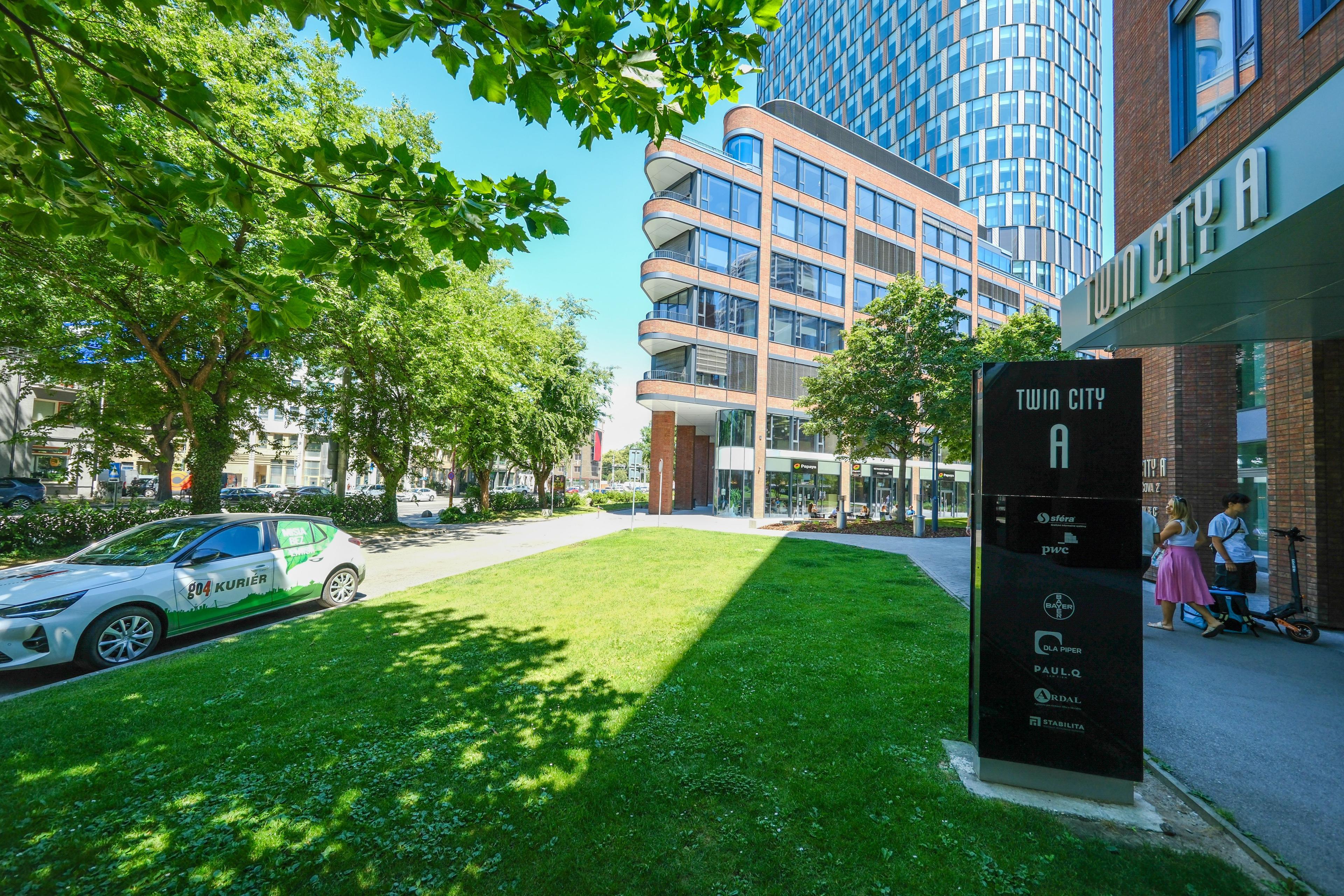
Thanks to the new mechanism for establishing easements, wells will soon be built on municipal plots in the Mlynské nivy area. These will supply heat pumps with energy from groundwater and at the same time serve as models for similar solutions across the city.
Beneath discreet covers hidden in the grass, technology will operate that ensures quiet, efficient, and cost-effective heating – with a significant reduction in CO₂ emissions.
A solution that reaches the underground and changes the established system
The Twin City case shows that even in a densely built-up city centre, space can be found for more environmentally friendly solutions – especially when local government and private companies work together. Hence, what is often an exception can become the standard.
The project has resulted in a new mechanism that, for the first time, allows the use of municipal land for installing wells for heat pumps.
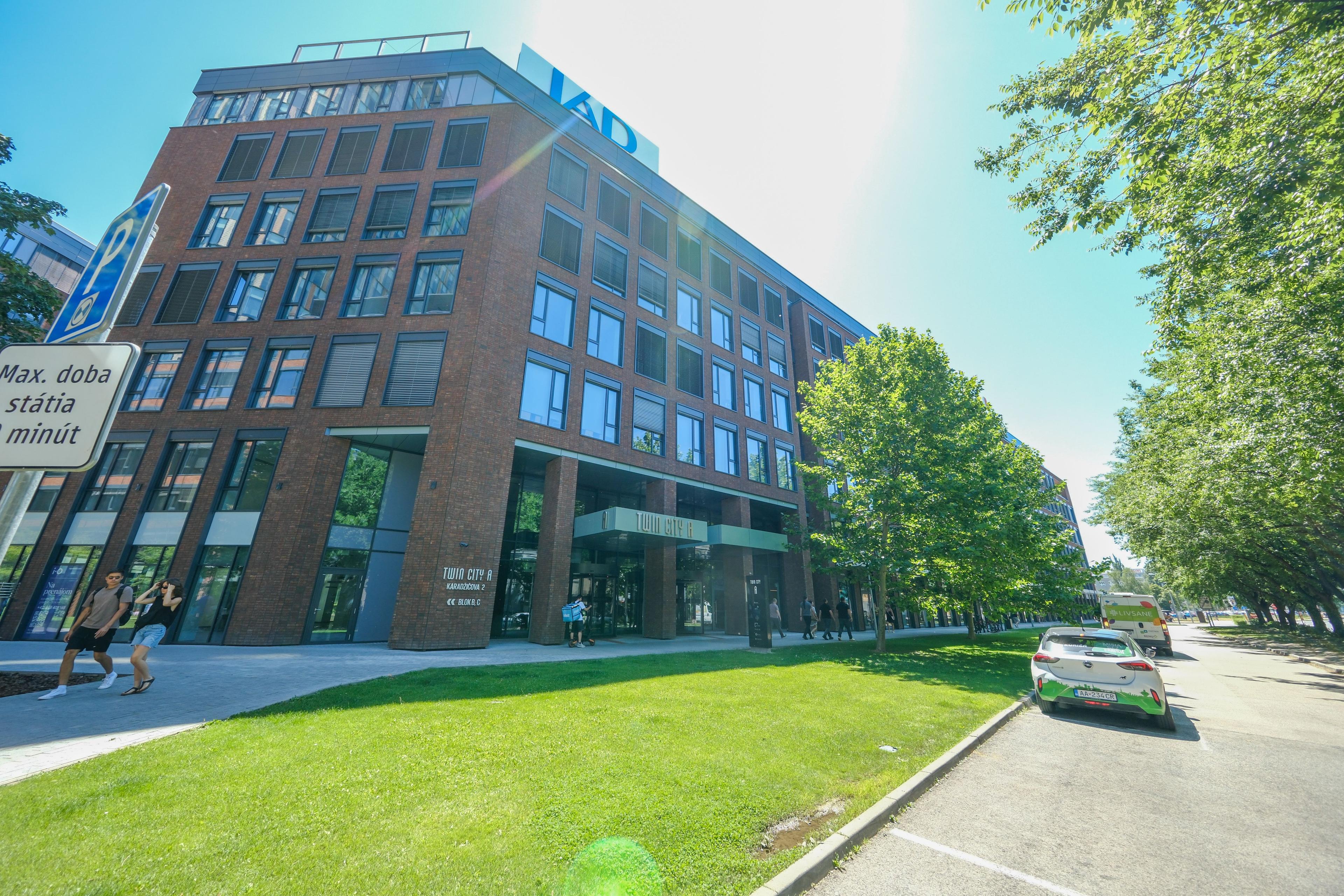
Why heat pumps? Although at first glance Twin City complex appears to be just another modern administrative complex in the city centre, beneath the surface a significant technological shift is taking place in its technical infrastructure a.
The owner, IAD Investments, together with one of the main tenants – the Swiss reinsurance company Swiss Re – decided to phase out gas-based heating and switch to a more sustainable solution: heat pumps using energy from groundwater.
The motivation was not only to reduce emissions, but also to achieve long-term economic and energy efficiency. With this commitment, the Twin City complex also joined the Bratislava Mayor’s Climate Challenge.
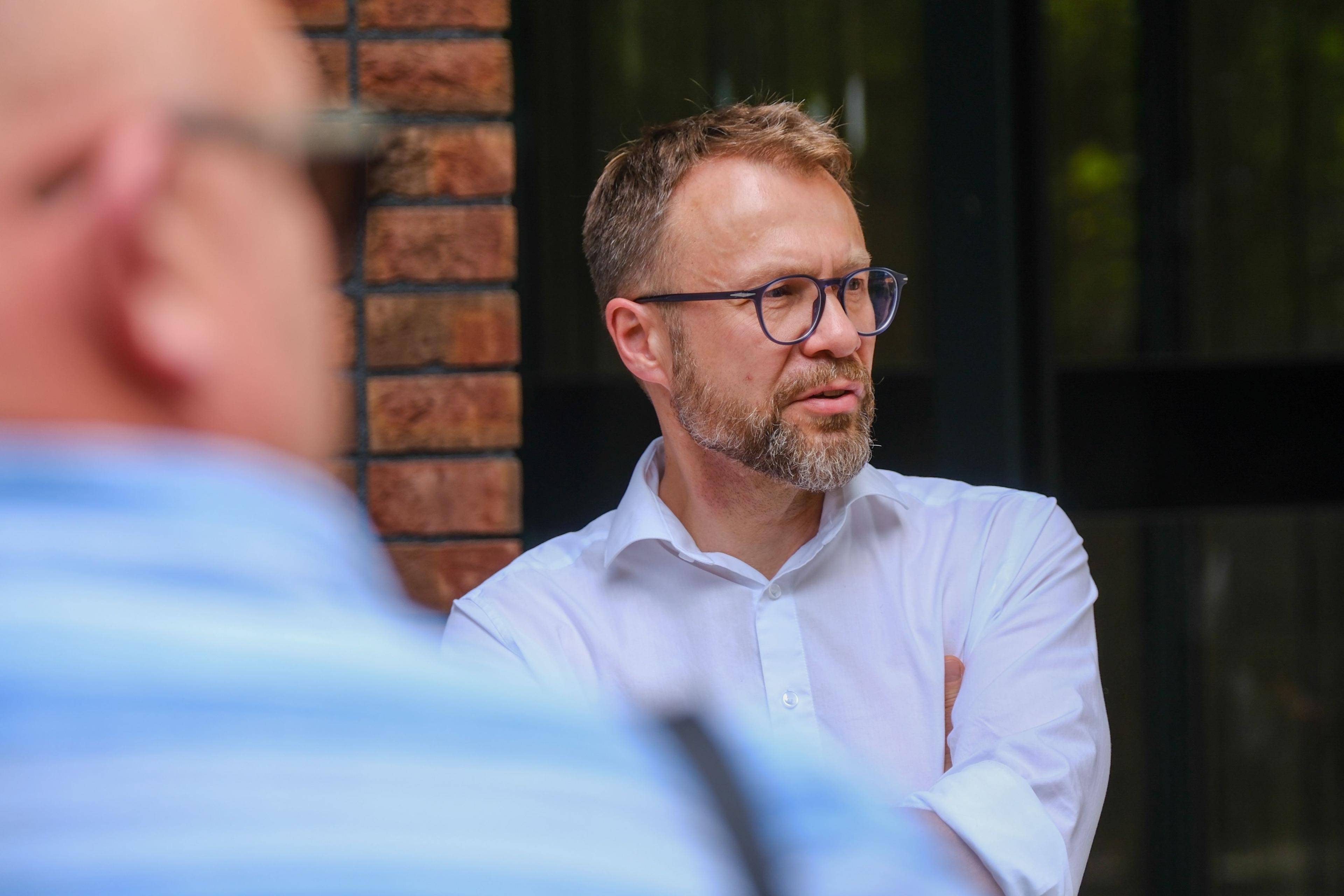
Jozef Kubica, director of property management at Bevix, a subsidiary of IAD Investments:
“In addition to climate goals, we also focus on practical results – lower energy consumption and greater attractiveness for future tenants. Preparing the analysis with proposed solutions took four intensive months of work and was accompanied by detailed discussions and consultations with experts from Grinity.”
Jozef Kubica, director of property management at Bevix, a subsidiary of IAD Investments:
“In addition to climate goals, we also focus on practical results – lower energy consumption and greater attractiveness for future tenants. Preparing the analysis with proposed solutions took four intensive months of work and was accompanied by detailed discussions and consultations with experts from Grinity.”
From data to a plan for change
The Grinity team was led by Jakub Pavelka, sector leader for commercial developers and head of the project management team. Together with his colleague Martin Jaterka, an energy optimization specialist, they carried out a comprehensive analysis of energy consumption, assessed the building’s technical capabilities, and proposed concrete measures. In addition to energy experts, civil engineers were also part of the team, and a full assessment of the building’s technical condition and potentials was conducted as part of the preparation process.
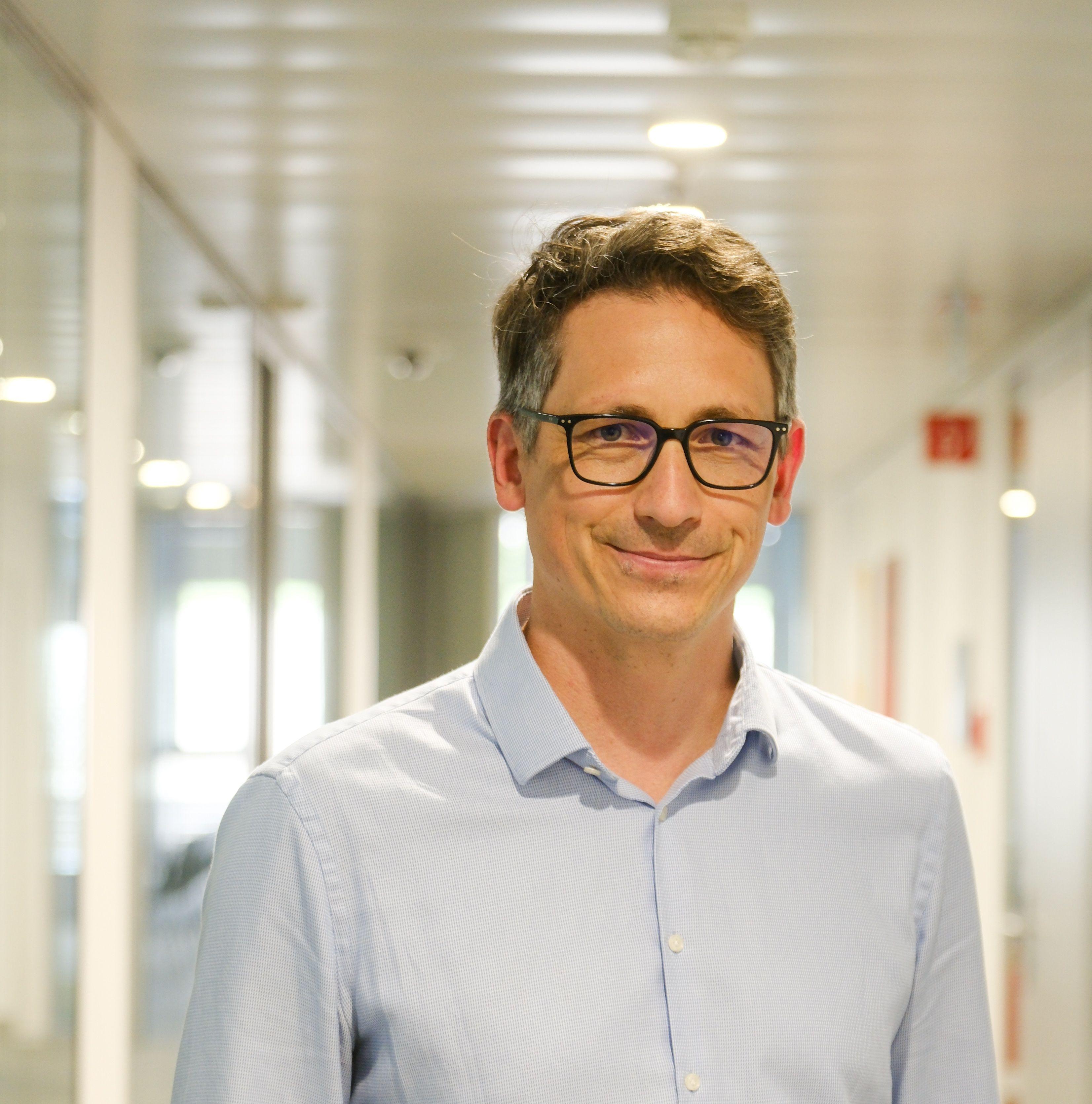
Jakub Pavelka, head of project management team:
“We received high-quality data and a clear assignment – energy optimization, a significant reduction of the carbon footprint, and minimal required capital investment.”
Jakub Pavelka, head of project management team:
“We received high-quality data and a clear assignment – energy optimization, a significant reduction of the carbon footprint, and minimal required capital investment.”
Even the tenant doesn’t want to wait
Swiss Re, a global reinsurance and insurance company, is among the companies that feel the impacts of climate change in the early stages – paying out billions of euros annually due to extreme natural events. That is why they decided to take action and become part of solutions that help reduce emissions directly where they operate. They have been very actively involved in the Twin City project.

Vladimír Suchan, head of facility management at Swiss Re:
“We’re not waiting to see what others will do. Each year, our operations in Slovakia account for 180 tonnes of CO₂ emissions. We want that number to be zero. If we succeed in cooperation with the owners of Twin City, it will be a solution that benefits both sides.”
Vladimír Suchan, head of facility management at Swiss Re:
“We’re not waiting to see what others will do. Each year, our operations in Slovakia account for 180 tonnes of CO₂ emissions. We want that number to be zero. If we succeed in cooperation with the owners of Twin City, it will be a solution that benefits both sides.”
Twin City in the spotlight at the first Climate Challenge workshop
The Twin City complex became the main topic of the very first workshop within the Bratislava Mayor’s Climate Challenge – an event focused on how large buildings can be heated, cooled, and managed.
Energy specialists from the Czech company Grinity travelled to Bratislava to share their practical experience in setting up comprehensive energy optimization and intelligent management of buildings B and C. Most representatives of the participating companies attended the workshop, actively engaging in discussions, asking questions, and sharing their own experiences.
The workshop also included a tour of the Twin City premises – starting at the lawn where wells for the heat pumps will be located, continuing through the technical facilities underground, and concluding on the building’s rooftop overlooking the changing city.
Technical details and return on investment
The installation of two water-to-water heat pumps is planned for the first quarter of 2027. Their maximum output temperature will reach up to 80 °C. The technology is fully compatible with the existing system, allowing for a smooth transition to the new heating solution without major interventions in leased spaces.
The existing gas boiler plant will be temporarily retained as a backup source, with plans for its complete shutdown after the new system has been verified over several heating seasons. Two extraction wells and three infiltration wells will be located on the plot near Twin City A. According to Grinity’s proposal, the return on investment is estimated at approximately eight years for Building B and nine years for Building C, based on current energy prices.
The Twin City project shows that energy transformation does not happen through political declarations, but through concrete decisions made by experts, investors, and people who are changing how the city functions.