Discover the History of the Palace
Uncover the hidden treasures of the Primate’s Palace and step into a world of stories concealed for centuries. Discover the unique English tapestries with classical motifs, rediscovered only in 1903.
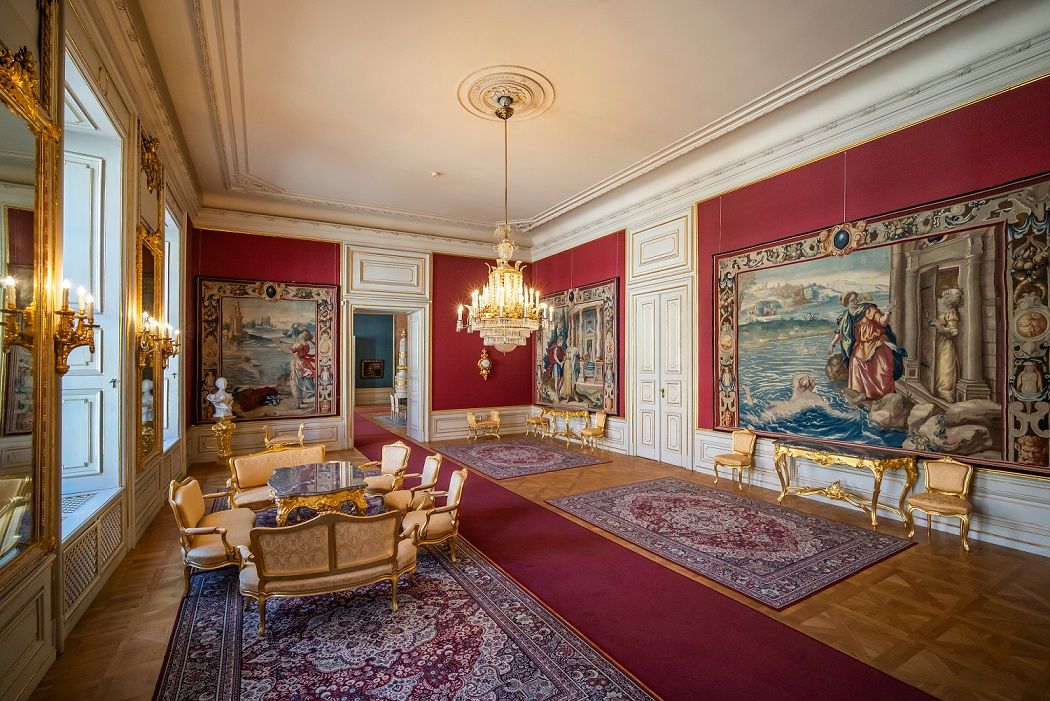
The Primate’s Palace — once the winter residence of Archbishop Batthyány of Esztergom and today the seat of the Mayor of Bratislava — is one of the most important Classicist architectural monuments in the city. Thanks to its architectural and artistic qualities, sensitively woven into the fabric of the historic city centre, it is one of Bratislava’s most sought-after landmarks.
Symbolism and architectural details
The palace is crowned by the coat of arms of Archbishop Batthyány, featuring a princely cap and a cardinal’s hat that symbolise his prominent standing in the Kingdom of Hungary and on the international stage. The coat of arms weighs around 150 kilograms and measures a metre across. Its central motif is a pelican feeding its young with its own flesh — a powerful symbol of self-sacrifice and devotion.
The interior and the spaces open to visitors
The interior of the Primate’s Palace breathes nobility and history. Visitors can explore the exhibition spaces of the Gallery, the unique Mirror Hall, and a tour route leading up to the archbishop’s glazed oratory, which looks down into the Chapel of St Ladislaus.
The Bratislava tapestries — a world-class rarity
The most precious exhibit in the Gallery is the only complete set of six wall tapestries of its kind anywhere in the world. This unique collection from the first half of the 17th century depicts mythological scenes and was woven in the royal tapestry workshop at Mortlake, near London.
The tapestries were discovered by chance in the antechamber of the Mirror Hall during restoration work in the early 20th century. Why they were hidden, and how they came to Bratislava, remain a mystery to this day.
The story of a lost and rediscovered treasure
Originally belonging to the Hungarian archbishop Juraj Pohronec Szelepcsényi, the tapestries were long thought lost. They were rediscovered only in 1903 during the restoration of the Primate’s Palace, when they were found carefully concealed behind the walls of the Mirror Hall. Each tapestry is a masterpiece, combining exceptional craftsmanship with a fascinating historical story.
A national treasure open to the public
Today you have a rare opportunity to admire these precious textile treasures with your own eyes. The Bratislava tapestries are among the few completely preserved sets from the 17th century and represent the pinnacle of the textile art of their time.
Displayed in the elegant salons of the Primate’s Palace, they create an atmosphere that carries visitors back in time and lets them sense the luxury and grandeur in which the highest social classes once lived.
Picture exhibitions in the Gallery
The Gallery also features smaller picture exhibitions, presenting:
- a collection of 17th-century Dutch and Flemish genre painting,
- an exhibition of 16th- and 17th-century Italian painting.
Together, these collections round out a comprehensive picture of the fine art of the early modern period.
A setting for landmark historical events
The appeal of the Primate’s Palace is heightened by the significant historical moments associated with it. Among the most important are the signing of the so-called Peace of Pressburg between the Austrian and French armies in 1805, and the ceremonial opening of the Hungarian Diet.